
How to Check Your Attic Insulation Level

You know attic insulation is important for home comfort, energy efficiency and indoor air quality. But it isn’t enough to install insulation and call it good (or trust that previous owners did); you’ll need to make sure you have enough insulation and that it’s in good condition. To determine if your attic needs more insulation, look for these signs:

  • Moisture or mold in your attic
  • Roof damage (if it wasn’t addressed promptly, your insulation could be compromised)
  • Rising energy bills, even though your HVAC is working well
  • Uncomfortable inside temperatures when the thermostat is set properly
  • Drafts in the home, especially those that come from upper floors
  • Rodents or bugs (they often enter a home through the attic)

If you’ve noticed any of these signs (or you just want to double-check your insulation for your own peace of mind), there are two ways to determine how much insulation is in your attic.

  1. If your current insulation is in batt form, read the fine print on the outer label and find the insulation’s R-value (a measure of how effectively it resists heat transfer).
  2. If you have loose-fill, rolled or spray foam insulation, you’ll need a tape measure so you can measure the depth of insulation. R-value is measured by the inch, so multiply the depth of the insulation by the R-value of your insulation type. Loose-fill insulation’s R-value ranges from 2.2 to 3.8, depending on the material. Rolled insulation has an R-value between 2.9 and 3.8. Spray foam can range from 3.6 to 8.2, depending on the manufacturer and whether it’s closed-cell or open-cell.

If you know your insulation’s manufacturer, you can check with them to find a more precise R-value. Still not sure? The pros at IBP Nashville can help you determine what type of insulation you have and what R-value it’s giving you.

Do I Have Enough Insulation?

Once you’ve figured out what R-value you have, you’ll need to determine if that’s enough. You can refer to this R-value guide to double-check what the proper R-value is for your home. The local climate plays a large part in determining the R-value you need. In Middle Tennessee, it’s recommended to have an R-value between R-38 and R-60 in an attic.

It’s also important to keep in mind that insulation can become damaged over time, lowering its R-value from what it initially was when it was installed. Moisture is the most frequent culprit, so if you suspect there’s been a water leak in your attic, consult a pro to see if the insulation is still effective.

If it turns out you don’t have enough insulation in your attic, turn to Installed Building Products of Nashville. Having a professional check is always the best way to be sure. We’ll check your installation and provide you with the best suggestion based on what we find. If you need more insulation, we’ll gladly install new insulation for you. We sell and install spray foam, fiberglass batt and fiberglass blown-in insulation for attics. We’ll help you decide which form of insulation is best for your home and its needs and come up with a cost-effective plan for you.

To set up a professional service to have your attic insulation checked, contact IBP Nashville today. Reach out online or call us at (615) 244-9420.
Spray Foam vs. Fiberglass vs. Cellulose: Which One Is Right for You?

Need to install new insulation but not sure which option is best for you? With so many insulation materials on the market, it’s a lot for a homeowner to digest. In this post, we’ll talk about the advantages of three common insulation materials: spray foam, fiberglass and cellulose.

Still not sure which insulation your Nashville home needs? No worries! When you hire IBP of Nashville as your go-to Nashville insulation company, our installers use the best-fit products for each area of your home based on industry standards. We’re happy to explain each of the products we’ll be using in your home!

Spray Foam Insulation

Made of polyurethane, spray foam insulation is applied in liquid form and dries quickly, expanding into thick foam. The R-value of spray foam can vary, and your insulation contractor can help you determine the recommended R-value for your home insulation. Spray foam has quickly become a popular choice among many customers. Due to its total coverage and the tight seal it creates, spray foam insulation is ideal for small gaps, crevices and cracks in your home’s envelope, as well as around piping and ductwork.

Spray foam insulation comes with many benefits, including:

  • Make homes and buildings more comfortable year-round
  • Provide soundproofing
  • Improve the performance of HVAC equipment
  • Decrease energy bills in your home or building
  • Reduce noise between different rooms and levels
  • Protect against air and moisture infiltration
  • Contribute to a healthier environment

Fiberglass Insulation

Fiberglass insulation is one of the most well-known options and comes in two different varieties: blown-in and batt. Blown-in refers to a method of insulation installation. Blown-in insulation is installed with a special blowing device. Blown-in fiberglass insulation can be installed in many areas of a home, from the attic to the walls to floors. Its advantages include:

  • Reduce your utility bills and maximize the energy efficiency of your home or building
  • Make your home or building more comfortable year-round
  • Reduce noises from outside and also from inside your home or building between different rooms and levels
  • Improve the performance of your air conditioner and furnace
  • Protect against air and moisture infiltration (and help eliminate mold growth)
  • Contribute to a healthier environment

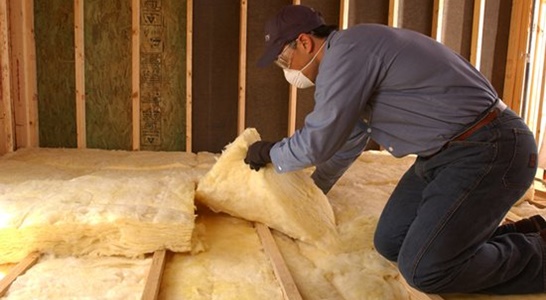
Fiberglass batt insulation comes in pre-cut panels and is typically made of fiberglass. It’s one of the most common forms of insulation available. Batts can be installed in various areas, such as the attic and walls. This material works well in both new construction and re-insulation projects. Batt fiberglass insulation also has the same benefits as blown-in, since it’s made from the same material. It’s important to note, however, that if fiberglass insulation gets wet, it can develop unhealthy mold, so it’s important to make sure your home is properly sealed to prevent moisture.

Cellulose Insulation

Cellulose insulation is a type of wood- or paper-based product. It is mechanically blown into or onto empty spaces in the structural part of a house. It is thick, dense and clumpy, with a consistency much like down feathers. The value of its shape and size is that the insulation can fit in enclosed areas and can conform around obstructions such as wires and ducts. It has many advantages, including:

  • It is relatively inexpensive, yet still has an R-value of about 3.5 per inch of thickness.
  • When walls are already finished, injecting loose-fill cellulose insulation is one of the few ways of adding insulation.
  • It stands up reasonably well against insects and vermin because it is treated with borates.
  • It’s an eco-friendly insulation option due to the materials it’s made out of.

Now that you know more about the three main insulation options, you should be able to make an informed decision when speaking with an insulation contractor.

Call the professionals from IBP of Nashville at (615) 244-9420 to speak with a local insulation installer about your options.

Batt vs. Blown-In Insulation

Spring is here, and the weather is beautiful—but the uncomfortably high temperatures will be here sooner than you think (it gets hot here in the Nashville area)! Now is a good time to start preparing your home. Will it be able to keep you cool and comfortable without emptying your wallet?

Insulating your house is a great place to start! Fiberglass is one of the most popular materials. It’s available in both batt and blown-in form.

Contact us if you’re ready for a free estimate on your project, or keep reading to learn more!

The Difference Between Batt and Blown Insulation

Which one is best for your home? Our team can help you determine that, but in general, here are a few things to keep in mind:

Batts

Fiberglass Batt Insulation

Batt, or blanket, insulation is:

  • Generally installed in unfinished walls (including foundation walls).
  • Well suited for stud and joist spacing that is free from obstructions like wiring, pipes, etc.

Blown

Fiberglass Blown-In Insulation

Blown-in insulation is:

  • Generally installed in enclosed existing walls (retrofit projects) or open new wall cavities (new construction projects) and unfinished attic floors.
  • Good for adding to existing finished areas and around obstructions like wiring and pipes.
  • Blown into place using special tools.
  • Also referred to as “loose-fill” (loose-fill is a popular type of cellulose).

Learn more about batt vs. blown insulation—and get information on other types of insulation—on the Department of Energy’s website »

There is no “better” type of insulation—it all depends on where you need to insulate, how much insulation you need and more. A professional will be able to assess your space and determine the material that will work best.

Home Insulation Installation in the Nashville, TN Area

Whether you install batt insulation or blown-in insulation, it will help:

  • Reduce your energy bills.
  • Make your home more comfortable.
  • Improve the performance of your HVAC equipment.

Our insulation contractors install blown and batt fiberglass and can insulate your attic, walls, crawl space and basement.

Contact the experts at Installed Building Products of Nashville if you’re ready to insulate your home and start improving its energy efficiency and comfort—call (615) 244-9420 or contact us online!

10+ Insulation Statistics You Should Know

Are you considering insulating your home? You may be unclear about insulation’s impact on the environment and your energy bills. Here, we’ll share some stats to help you learn a little more about insulation.

Insulation Often Contains Recycled Content

One primary purpose of installing insulation is to reduce your home’s environmental impact by decreasing your energy use. But what about the environmental friendliness of the material itself? Many types of insulation actually contain recycled content, making them eco-friendly. Here are some examples:

  • Mineral wool contains an average of 75 percent post-industrial recycled content. It also doesn’t require the use of chemicals to make it fire resistant.
  • Fiberglass insulation is made from at least 20 to 30 percent recycled glass content.

Insulation Reduces Home Energy Consumption

Of all the different ways to save energy—such as turning off the lights when you leave a room, unplugging unused electronic devices and adjusting the thermostat setting— the most effective option is to install insulation! Here are some insulation statistics to prove it:

  • On average, heating and cooling account for 54 percent of a home’s annual utility bills.
  • Uninsulated floors waste up to 10 percent of your home’s heating bills.

Insulation Statistic

  • Insulating the basement walls or slab foundation can reduce heating costs by 10 to 20 percent, especially in cold climates.
  • You can reduce heat loss in your home by 67 percent by installing wall insulation where there previously was none.
  • Because of these impressive savings, the cost of installing insulation pays for itself in about five to six years.
  • You can decrease heating and cooling costs by up to 40 percent by installing adequate attic insulation.

Insulation Fact

Insulation Effectiveness Varies

When you install insulation, the goal is to reach a certain level of thermal resistance, or R-value, to keep warm air in during the winter and out during the summer. To determine the effectiveness of an insulating product, just look at the label. There, you’ll find the R-value. The higher this number is, the better the material is at slowing hot air attempting to pass through it. Here are some insulation statistics to consider:

  • Fiberglass batts typically range in R-value from R-2.75 to R-5.25 per inch.
  • Cellulose inhibits airflow with an R-value of R-3.6 to R-3.8 per inch.
  • Cotton batts are available with an R-value of about R-3.4 per inch.
  • Polyurethane spray foam ranges from about R-3.6 per inch for low-density, open-cell foam to R-5.5 to R-6.5 per inch for high-density, closed-cell foam.

Insulation Contractors Serving the Nashville, TN Area

With these insulation statistics in mind, it’s clear that every building needs an adequate layer of the right material. Contact the insulation contractors at Installed Building Products of Nashville today, and we’ll arrange an inspection for your Nashville, Tennessee home to determine if you could benefit from adding more insulation!

Resources:

Adding New Insulation Over Old Layers

Does your home need more insulation? Most homes already have layers of insulation in attics and walls. Perhaps you’re wondering if you should remove your current insulation or just add new layers over the old. If your question is “Can you put new insulation on top of old insulation?” we have an answer for you!

In short, yes—you can install new insulation over old insulation.

Contact us to start your project, or keep reading to learn more about adding insulation to your home!

Can I Add New Insulation Over Existing Layers?

According to ENERGY STAR¼, you can put new insulation over old insulation, “unless it is wet. If it is wet or appears that the insulation has previously been wet, you should look for the cause and repair the problem
” Wet insulation is problematic, as it can lead to mold, mildew and sometimes the rotting of ceilings or roof rafters.

Although insulation professionals will handle the installation for you, here are some things to keep in mind about removing old insulation and installing new insulation over old insulation, according to ENERGY STAR:

  • “Faced” insulation should not be placed on top of existing insulation in the attic. Any new batt or roll insulation installed over existing insulation in the attic needs to be without a vapor retarder (face). The vapor retarder on top of or between layers of insulation can trap moisture. Any existing batt or roll insulation in the attic should have the facing against the attic drywall floor or no facing at all.
  • Batt or rolled insulation or blown loose-fill insulation (fiberglass or cellulose) can be installed on top of old insulation.
  • Insulation should be rolled out perpendicular to the joists—and unfaced rolls should be used.
  • Rolled insulation should not be tacked down. The R-value can be reduced if the insulation is squashed or flattened.
  • It’s recommended to air seal before installing insulation since air leaks can hinder the performance of insulation and significantly reduce the energy efficiency and comfort of your home.

The most important thing to keep in mind is that you don’t have to worry about all this. Professionals will be able to answer any questions you have—and handle your entire home insulation project.

If you live in the Nashville, Tennessee area, Installed Building Products of Nashville can help. We have experience installing all types of insulation and can help you with your project. Contact us today to learn more about our services or if you’re ready for a quote!